Thursday, October 16, 2014

Test Drive: Mini Cooper Countryman

By Jonathan Mellberg

There are really only a few cars out there that scream FUN when they catch your eye; and it's not even an issue of price. A Ferrari can be fun; so can a Hummer. So can a Maybach, a Mustang, or a turbo-diesel Dodge Ram pickup truck. But none of these are a singularly-focused representation of FUN; and even if they were, they’d still be nowhere as close as the Mini is to embodying it.

There’s only one other car I can think of that is as innocently playful as the original Mini Cooper, and that’s the original Volkswagen Beetle. The people’s car was born in 1938. In 2003, production of the Type 1 Beetle ended, with over 21 million cars sold worldwide. It wasn’t until 1997 that the New Beetle took the reins, fully reincarnated; much the same as its spiritual cousin, the Mini Cooper. The first Mini Cooper hits the streets in 1961. It, like the Beetle, enjoyed a rebirth near the turn of the century when BMW fully acquired the brand in 2000. And ever since, Mini’s jubilant style has continued to evolve and proliferate beyond the original, singular model, the Cooper.

Today we still have the Cooper, in both naturally-aspirated and turbo-charged offerings. But the Mini family has grown; the Cooper now has several unique iterations: There’s the Countryman, the Paceman, the Convertible, the Hardtop, the Coupe, the Roadster (a drop-top version of the Coupe), and the high-performance variants of these models, called John Cooper Works. Need to read that again? Me too, and I had to write it!


Mini Cooper S Coupe
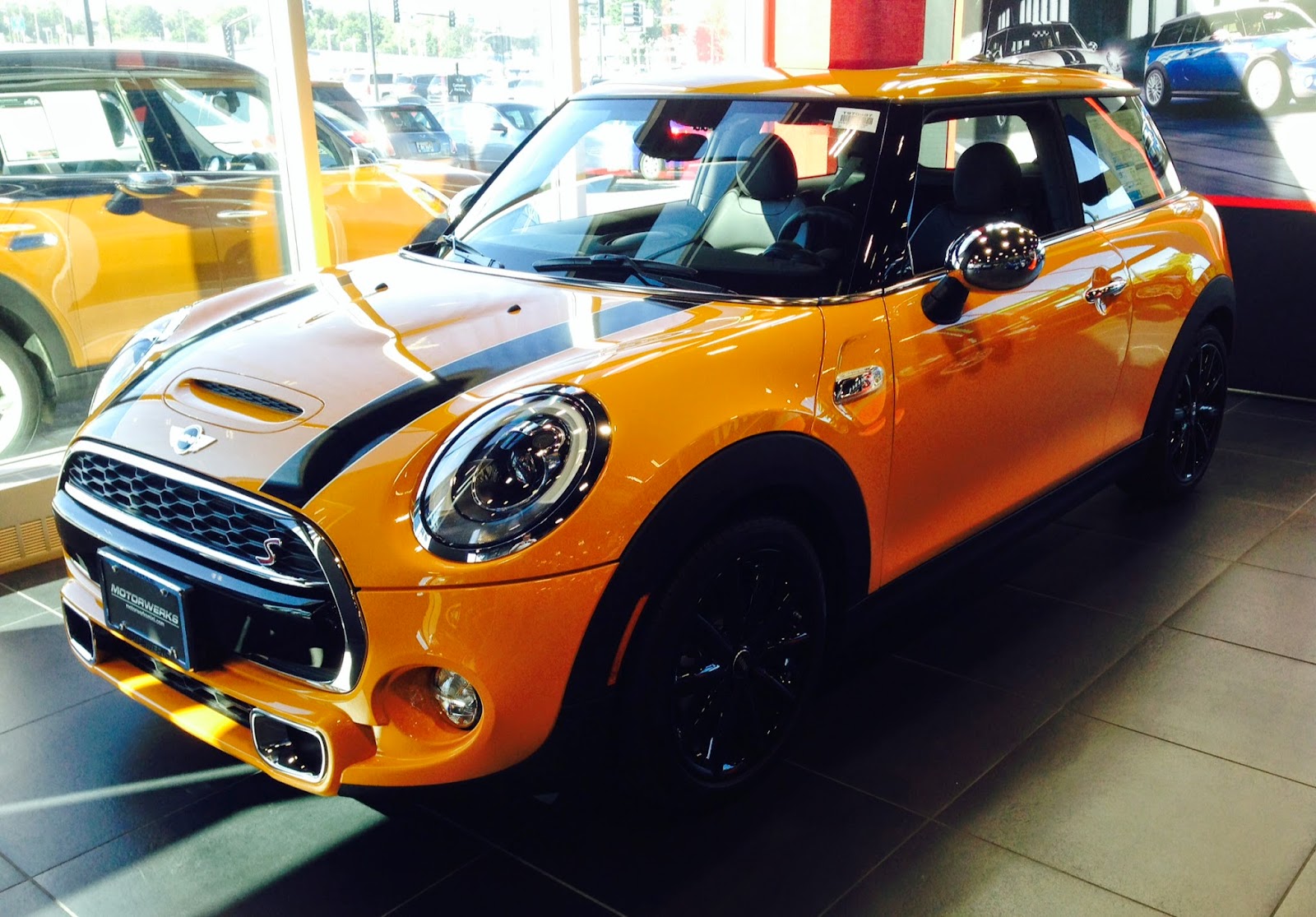
Mini Cooper S Hardtop

Mini Cooper S Clubman

Mini Cooper S Hardtop

For the love of Pete, they all look the same! Well, only until closer examination. While I won’t get into the thick minutiae of model differentiation, I will say that every Mini is unique but familiar, just like a real family. Brothers and sisters may look alike and talk alike and even walk alike, but they are still individuals. Today we’ll be focusing on only one member of the Cooper family: The Countryman. My curiosity in Mini was piqued after a long-held perception regarding the brand was recently erased. Mini’s can be affordable! Sort of, at least. This revelation was in part due to my ignorance regarding Mini’s price point; I assumed that since they are in cahoots with BMW (and until recently in MN, sold at BMW dealerships) and imported from across the Atlantic that they must be too expensive to ever seriously consider. And to a certain extent, that is still true. They are a niche brand with niche cars. But they’re actually quite a bit cheaper than I realized. A base Mini Cooper Hardtop stickers for $20,450, and the Mini Roadster stickers for $26,100 (on the other end of the scale). Not too bad. Of course, prices only go up from there.


Mini Cooper S Countryman


The bigger piece of the dilemma as to whether I’d ever want to purchase a Mini primarily has to do with our lovely Minnesota climate: Winter. Kill me now. I’m only (half) kidding; it’s not really that bad. But a good “you-betcha” snow storm can be treacherous enough when piloting a big, four-wheel drive truck with a foot of ground clearance. There is no way you’ll convince me that the go-kart Mini can even begin to compete with that (especially when the roads are blanketed in five inches of snow).

Insert segway here: The Mini Cooper Countryman. It’s relevancy? Available all-wheel drive, higher ground clearance, more room. Now this is a little more Minnesota-friendly. Like is two-door brother, the Mini Paceman, the Countryman is the Mini for grown-ups who are ready for true all-season weather, if equipped. The Mini Countryman comes in three flavors: Base ($22,750), S ($26,100), and ALL4 ($27,850) trim levels. The base comes with a turbo-free, 16-valve 1.6Litre inline-four engine that rounds up 121hp and sends power to the front wheels only. The S and ALL4 models slap a turbo to that same 1.6Litre motor, and the result is an additional 60hp. You can shift yourself with a six-speed manual or let the six-speed automatic make light work of gear swaps. All Countryman models come with four doors and five seats. They’ve been an IIHS top safety pick for the last few years; no doubt the seven airbags help out. Standard equipment includes a CD player with AM/FM radio, USB/i-Phone/i-Pod hookups, and six speakers (Navigation, Sirius XM radio, and a more robust Harmon Kardon stereo are optional). Alloy wheels come in the 17” variety, with 18” wheels optional. Curb weight is just under 3000lbs on the base model and just over 3200lbs on the ALL4 (thanks to engine modifications and the inclusion of the all-wheel drive system). Not unlike BMW, Mini offers free scheduled maintenance for 3yrs/36,000 miles (BMW’s free maintenance is 4yrs/50,000 miles). The Countryman is the first Mini to offer all-wheel drive (followed by the Paceman), and is a three-time Dakar End Race champ (endurance racing). Just in case you needed to know, which you don’t. What I care about is this: Is the Countryman still quick? Yes, according to Mini’s website (0-60mph in 7.0 seconds in the FWD S model). Is the Countryman capable? In all-wheel drive mode, I’m sure it is. But what about functionality?


Mini Cooper Countryman


nifty hatch release


After a splendid morning at Cars & Coffee (at the Automotorplex facility in Chanhassen, MN), I headed back into the metro interior and stopped off at the brand new, stand-alone Mini dealership. I’ve never seen a dealer like this. The entire structure is painted black, save for a splash of playhouse colors that pinstripe and border the structure in a few specific areas. Why’d they do this? It was a question that my ever-so capable salesman Charlie Wyffels was more than prepared to answer. In our conversations regarding the cars and the philosophy that is Mini, Charlie helped me realize something that was so obvious I’m embarrassed I forgot it. Mini is FUN, always has been.  And since BMW strategically distanced itself from the Mini brand, so now is their dealership. I can dig it.


new Mini dealership in Golden Valley, MN


And how about the car? Well, I did want to sneak behind the wheel of a new Mini Countryman ALL4, but as none were currently on the lot, Charlie tossed me keys to a Countryman S, which is basically the same car (and same powertrain), sans all-wheel drive. Which was fine, since there was no snow (and since we wouldn't be hitting any dirt tracks during on drive), AWD isn’t a requisite for me. Charlie offered me a model with a six-speed manual, which I gladly took. Our white Countryman S was more garden variety than others; it didn’t have a moonroof or navigation or leather upholstery. All fine by me. Firstly, I’ve never felt the need for a moonroof. Secondly, leather is only nice when it can be heated and cooled, not just heated. Thirdly, I’m a guy; I don’t need navigation and much prefer arguing with my wife when it comes to giving or taking directions.


Mini Cooper S Countryman


The first thing I noticed when Charlie handed me the key is the key itself. A solid, hefty, circle-shaped medallion, the “key” inserts into the dash to the right of the steering wheel and immediately below the cute, little “start” push button starter. Inserting this key also charges it; no more hoofing it to Radio Shack every five years for a new battery. Though a small car (still bigger by Mini standards), the Countryman easily accommodated my 6’2” frame. The rear seats were OK, but I wouldn’t recommend extended trips for long-legged passengers like myself, especially if you’ve got a tall driver in front of you. Mini has grown up over the recent years but never takes itself too seriously. There are still plenty of cool fighter-jet toggle switches, and this modern Mini even features a built-in Mini sunglasses case. Cool! The parking brake reminds me of the throttle handle on a 747 jet and its lever action sort of feels the same too. A giant, circular speedometer is still front and center in the Countryman’s dash; a smaller look-alike gauge that features the tachometer readings sits above the steering wheel. Fit and finish and quality are above segment standards, and considering Mini’s parent company is BMW, they should be. The Countryman is a handsome fellow whose big-eyed headlights and upright stance work very well together. Though I must say, I’m a really big fan of the Countryman’s twin, the Paceman. With two doors instead of four and a sloping roofline, the Paceman is instantly sportier than his more proper brother.


As for driving impressions: the Countryman isn’t loud even in S trim. Its six-speed manual transmission clicks through gears nicely enough, though shift action is just slightly rubbery.  The Countryman rides on a wheelbase that’s inches longer than your standard Mini Cooper Hardtop. The result is a more forgiving ride which goes a long way when debating on making a Mini your daily driver. Power is peppy but not outrageous. As an owner I wouldn’t regret not having more oomph, as long as I upgraded to the same turbo-charged S model of which we drove. Though taller and longer and with more ground clearance, the Countryman can still channel its inner go-kart; zipping through turns is fun and fancy free, with very minimal body roll. The whole package, which seems a bit silly from a distance, really gels together once you’re behind the wheel. The bigger Countryman is adult enough to accommodate you and passengers with a little room to spare. Its optional all-wheel drive coupled with its taller stance means that Minnesota winters aren’t out of the realm of possibilities. And the interior, with premium-feeling materials and an upscale feel, lets the owner feel good (and smart) about his choice. The car is definitely fun; and I’m sure that’s the whole point. My reservations mainly stem from concerns over costlier repairs (due to its BMW-sourced underpinnings, its chassis is shared with the BMW X1), but if bought new, scheduled maintenance is free for the first 3yrs/36,000 miles. Hooray! That leaves one nagging worry; will I get tired of the Mini’s excessive personality? With all its cool interior toggle switches, its porthole-sized speedometer and tachometer, and its airliner-style e-brake? I think I’d answer this question the same as the next; do I ever tire of having fun? No, I sure don’t.


Mini Cooper Paceman (the Countryman's better-looking brother)


Post Script
I'd like to take a moment to thank my salesman, Charlie Wyffels. A man who knows his product through and through, what's equally impressive is how easy Charlie was to talk to. He being a fellow auto-enthusiast sure helped. If I ever decide to embrace my inner-child I'll be heading back to Golden Valley Mini (known as Motorwerks MINI) to see Charlie about a new go-kart, i.e. Mini Cooper.


-Thank you for reading The Wheelspin Journal-
photo by the author


Monday, October 13, 2014

And now for a compliment or two


By Jonathan Mellberg
I tried with diligent intention write a blog that bashed many current designs from within the auto industry. Guilty parties included Ford, Cadillac, Lincoln, Lexus, VW, and Acura. But it was just too hard to write without it sounding whiny and half-finished. And while hate speak is often fun (and easy) to pen, I thought I’d instead spend some words that shine the spotlight on those designs that are worthy of praise:
BMW: Those kidney grills never get old. And just when you thought BMW designers couldn’t channel any more inspiration, a new generation of the 3, 5, 7, etc. debuts and we fall in love all over again. Of special note is the all-new 4-Series BMW, which is really a 3-Series coupe with its own look (though you can still get a new 4-Series with four doors in the Gran Coupe model). And what a good look it is. Likewise, the new M4 and its brother the M3 are real knockouts, but neither is as stunningly unique as the new hybrid i8. The 6-Series Gran Coupe is also a looker, though a bit unnecessary considering the breadth of BMW’s current lineup and the curious trend BMW is adopting. Further beefing up their portfolio, BMW will soon add the all-new X7 to go with the five other “X” model SUVs currently on sale. And all are handsome. In fact, BMW only has two ugly ducklings: the Gran Turismo's, in both 3 and 5-Series iterations.


BMW M4

Mercedes-Benz: Casual observers like me are all wondering the same thing: When did Mercedes get so sexy? Today’s entire fleet of M-B vehicles are simply stunning, from the race-bred SLS coupe to the tried and true, old-school G-Class (scheduled for a major update in the near future), M-B is steadily premiering a host of new vehicles as well, from the GLA-Class SUV to the upcoming S-Class coupe. The stodgy, squared-off Mercedes-Benz your grandpa owned is a thing of the distant past. New M-Bs today feature sensuous lines and curves, detail-oriented front grills, power-bulge hoods, and special edition AMG models that act the part of bad-ass even more than they look it (Google the new AMG GT, now!). Weak links? Maybe the new B-Class electric vehicle. Might as well toss in the GLK-Class and the M-Class too, as they’ve never been the best looking SUV’s out there. All in all there's nary a nit to pick; keep doin’ what you’re doin’, M-B!


2015 M-B S-Class coupe

Ferrari: I shouldn’t even open this can. If you know me, you know my adoration for autos reaches all-time highs when Ferrari comes to mind. Maranello’s current lineup shows no fault as far as I’m concerned. The F458 Italia wonderfully continues the tradition of a perfect starter Ferrari; it is gorgeous from any angle. The current F12 is just about as sexy as it gets. The boys at Pininfarina (the design firm who pens most Ferraris) rarely takes a wrong turn in designing for the lucky 1%. The FF, Ferrari’s first car equipped with all-wheel drive and its first “shooting brake” design, is probably the brand’s most controversial design, but I love it to death. I’m Luke-warm over the California convertible, but as it’s only one of two Ferraris I’ve ever sat in, I still love it.


Ferrari F12
Lamborghini: Lamborghini design is like a stereo with a broken volume knob; it only gets louder, more intense, more in-your-face. Lamborghini cannot be like Ferrari, and if it could, it wouldn’t want to be. So if Lamborghini can’t be sexy like Ferrari, it’ll be aggressive. And boy, Lamborghini is. The still-fresh Aventador is practically aggression incarnate, so what does that make the all-new Huracan? As I sit here at my computer, looking at my screen background (a white Huracan), I don’t know how to describe it. Like the devil that’s all grown up? Like a wolverine that’s been through finishing school? I’m not sure. What I am sure is that it’s far better looking than the Aventador, and it’s light years ahead of the Murcielago and Gallardo, predecessors of the Aventador and Huracan, respectively. And the forthcoming Asterion ain't too shabby either. 

Lamborghini Huracan
Kia: It’s true; I do hate myself for admitting that Kia makes a great looking car these days. I don’t even like admitting they’re a worth-while brand in today’s automotive landscape. But, like their parent company Hyundai, Kia has spent the last decade leaping hurdles in both design and quality, and where they are today is downright respectable. Kudos to Kia for finally choosing a corporate grill to unify the brand. Aside from the badge (insert yawn here), the grill’s bow tie silhouette design seems to work quite well wherever it appears. Their best-looking models? The K900 and the Optima. The real shocker is the 2015 Sedona minivan, which is quite fetching, and not just for a Kia or a minivan, but for any car. Yeah, I said it.

(Unfortunately, nothing is free, nor readily accessible without trampling some barely noticeably (and even less understood) line of legality. Which is why I cannot picture the new Kia Sedona. Below is the link. I invite you to check it out.)


-Thank you for reading the Wheelspin Journal-

photo by the author

Thursday, October 9, 2014

Interview: Dustin and Cheyenne Sprague's Silverado SS & Trailblazer SS

By Jonathan Mellberg
photos by the author*

The “SS” moniker has been a Chevy staple forever. In the 60’s it really meant something. It meant power; gobs of power. And since the death of muscle beginning in 1971, its reputation has deflated. Even the seventh generation Impala SS from 1994-1996 only made 260hp from its Corvette-sourced 5.7Litre V8. But things are getting better. Today, Chevy no longer carries the SS badging across most of its line. Instead, only one vehicle currently uses the name (obviously, other than the Camaro SS). It is called simply, the SS (sedan).


Me personally, I’m kind of a big fan of the 2000’s myriad SS variants that Chevy offered. From the 5.3Litre V8, 303hp Impala SS of 2006-2009, to the Malibu SS (and Malibu Maxx SS) of 2006-2007 that featured a 3.9Litre V6 making 240hp, the SS stamp was all over the map. It even found its way into its truck lines.

And I’m not talking about the fat, old 454SS from 1990-1993. While still a cult favorite, it featured only a garner-red interior, rear-wheel drive, and a 7.4Litre V8 that, while producing a healthy 405lb-ft of torque, could only muster 255hp to go with it. Other than drag racing and donuts, it was a pretty useless truck in terms of performance. This brings us to the 2003 Chevy Silverado SS and the 2006 Chevy Trailblazer SS.


Why both? Or more appropriately, why both at the same time? Dunno. You’ll have to ask my good friends Dustin and Cheyenne Sprague. They’re the owners. I’ve known Dustin forever (roughly 25 years); we went to school together, graduated together, and even worked at the same Ford dealer out of high school. While I consider myself a decent automotive detailer, Dustin’s craftsmanship puts me to shame. But that’s not his day job; Dustin is an amazing electrician. His attention to detail is evident in both areas. His wife, Cheyenne, entered the scene a few years outside of high school and they’ve been together ever since. They live forty miles outside the Minneapolis metro area and raise their versions of children: two dogs, Zoe and Zeke. We've had a lot of great times: I sold them their current house, roomed with them, was an usher at their wedding, just as Dustin and Cheyenne were part of me and my wife's wedding party.

A little background on their vehicles: Their first SuperSport purchase was their 2004 Chevy Silverado SS, which was introduced by Chevy in 2003. The drivetrain consists of the Vortec 6.0Litre V8 producing 345hp and 380lb-ft of torque mated to a four-speed automatic (the same combination as found in the second-generation Cadillac Escalade). 0-60mph arrives briskly at 6.3 seconds. All-wheel drive is standard; the system sends 32% of the power to the front wheels and 68% to the rears. Speaking of wheels, the Silverado SS features 20” stock alloys shod with lower profile rubber. In 2004, rear-wheel drive was introduced as on option but without the AWD model’s rear disc brakes. In 2005 an “Intimidator SS” special edition was offered as well; less than 1,000 examples were produced. 2005 also saw the addition of a moonroof but with the tradeoff of losing all-wheel drive. The original three colors were: Black Onyx, Victory Red, and Arrival Blue Metallic. Blue was dropped the next year, replaced by Silver Birch Metallic. Interiors of the Silverado SS feature black leather, front buckets, a center console, Bose stereo and SS-specific white-faced gauges. In 2005, cloth interiors became optional.

Chevy Silverado SS

Dustin and Cheyenne purchased their second toy a few years later: their 2006 Trailblazer SS. First offered in the same year, the Trailblazer SS features an aggressively single-minded engine: the 6.0Litre LS2 V8 originally found in the fifth-generation Corvette Z06 (the LS2 V8 was also featured in certain Pontiac GTOs and Chevy SSRs). The LS2 is a fire-breather good for 395hp (400hp in ‘Vette Z06 mode) and 400lb-ft of torque, its only flaw is being mated to an inferior four-speed automatic (Z06 Corvettes were paired only with six-speed manual transmissions). 1-2 upshifts are always met with a kick to remind you of what’s lurking under the hood. RWD or AWD is available and 0-60mph comes much quicker in the Trailblazer SS at 5.4 seconds, a full two seconds quicker than the 5.3Litre V8-equipped non-SS Trailblazer. Like its big brother, the Trailblazer SS is fitted with 20” wheels. It also features Corvette brake pads on the front rotors and stiffened/lowered suspension. Oh, and it can go 130mph.

Chevy Trailblazer SS


Saturday, September 27th, 2014

On what was probably the last beautiful Saturday of the year, Tate and I were met by Dustin and Cheyenne over at our house. Into the driveway entered the matte black Trailblazer SS, followed closely by the gloss black Silverado SS. But before setting off to evaluate each ride, we took a detour, heading into Anoka to Main Motors, a Chevy dealer. I had prearranged a test drive with a very special vehicle, the all-new SS sedan. Powered by the Corvette’s 6.2Litre V8, this relatively unassuming Malibu doppelganger gets up and boogies as if its ass were on fire. With myself and our salesman taking up residency in the rear (and spacious) seats, Cheyenne climbed into the driver’s seat first, Dustin riding shotgun. For a woman who (on several occasions) has demonstrated an above-average zeal for spirited driving, I was surprised in the docile manner to which Cheyenne piloted this $47K super-sedan, though medium traffic didn’t help. We eventually pulled off the highway onto a frontage road that ran for about a mile into a dead end. Cheyenne switched spots with Dustin, and that’s when the real fun began. Dustin had no qualms about putting the SS through its paces. Within a couple blocks we were approaching highly unorthodox speeds: 60mph, 70, 80, 90… And just when we began running out of road (not to mention my “oh-shit!” radar internally blaring) Dustin dove into the brakes, bled speed until we met legal velocity, whipped a U-turn, and repeated. The second stretch proved more impressive that the first; the SS saw triple digits for probably the first time in the 535 miles of its still-new life. I dare say, the new SS sedan might very well by the apogee of the Super Sport moniker since the beginning muscle's demise in 1970; the power of a corvette, with five good seats, great visibility, and a paddle-shift six-speed transmission. Seriously, given the choice between a Camaro SS, a new Corvette, or the new SS sedan, it would take some serious convincing to turn me away from this four-door wonder boy.

Chevy SS sedan


Dustin and Cheyenne Sprague


It took about ten minutes to get back home; just enough time to let my pulse quiet down. The four of us piled into our living room for the next forty five minutes. Below is the distilled extant of our conversations.

1.       Why the SS? More importantly, why two SS’s?

Cheyenne: They look cool and plus they are fast! I loved Dustin’s truck and why not have the same power with half the weight of the vehicle.

Dustin: Always wanted one, I like the idea of a big motor in a 1500 pickup truck. Always wanted two and why not have the matching SUV?


2.       Which do you prefer and why?

C: I prefer the trailblazer, not only is it quicker but I like the sunroof with the cloth seats and the auto start.

D: I like the truck; we use it more than just a show truck. It’s an everyday vehicle.


3.       Both of you were previous Ford junkies. What swayed you to Chevy, and did it have anything to do with the fact that Ford (for the most part) doesn’t offer sport-variants of their trucks?

C: When we were looking for a truck ford’s retail was very expensive and the resale was much less than Chevy’s, we got a good deal when purchasing the Silverado SS since gas was so expensive and we have to put premium in both.

D: At the time the only sport truck Ford offered was the Lightning (F-150) and that’s not practical for what we would use it for. The SRT Ram is great but I can’t use it hunting.


4.       What are your thoughts on the new SS sedan offered by Chevy? 

C: I like it, and wouldn’t mind owning one!

D: Love it always been a fan of the GTO with a 6.0 motor, haven’t gotten to drive one but guess it would be fun. Wish it was all wheel drive. (questions were answered before driving the SS on the date of the live interview)


5.       Does the SS line of cars appeal to you? Or is it just the trucks you find attractive?

C: Yes I have always loved the SS’s as far back as I can remember I was in love with the cars first starting with the Monte Carlo SS late 80’s body.

D: Just the trucks, the only other SS I would like to own someday would be a 95-96 Impala                 SS.


6.       What advice can you give to those who are mulling over buying vinyl body wraps for their vehicles?

C: Do your homework and don’t settle on just one company….interview a few different companies. I know it looks cool but don’t do your entire vehicle, do accent pieces, there is up-keep to the vinyl with living in Minnesota!

D: Don’t do it. They look amazing and turn heads, but they are high-maintenance and not good in MN winters.


7.       If you could swap both SS vehicles for any other GM specialty vehicles within the last 30 years, what would they be (GXP Bonneville, GXP Grand Prix, Buick GNX, Typhoon/Syclone, Corvette ZR1, Corvette Gran Sport, Impala SS, etc.)

C: Hmmmm I’d have to go with the GXP Bonneville, but I do love the Buick Park Ave Ultra!!

D: GMC Typhoon (white with white wheels) and a Chevy Reaper (black with black wheels)!!


8.       If you could start a project car, what would it be?

C: Monte Carlo SS

D: I would love to slam a diesel. A 98’ 454 Duelly all black.....lowered!!

                                                                      
9.       What’s next, after both these SS’s are gone or sold?

C: I wouldn’t mind having a car next (the SS), otherwise we will be looking into a 4 door Chevy pickup truck.

D: I would like a (Chevy) crew cab Duramax, and a short box (Chevy) 454 SS from 1995 or 1996.


10.   Does the current Ford SVT Raptor hold any appeal?

C: I bet they would be a fun truck to drive; I personally am not a fan of this body and the plastic looking parts on it, but I do like the look of the Chevy Reaper.

D: Yes and No, I love the concept but I like the first generation Raptor with the super-charged V8.


Interview complete, the four of us hustled outside and squeezed into the (extended cab) Silverado SS with myself behind the wheel. Ah, I love Chevy pickups; as comfortable as cars they are. The leather-wrapped steering wheel was large and in charge, complete with factory audio controls that Dustin had managed to integrate with their aftermarket stereo. It’s easily apparent that the big Silverado SS wears its badges with a bit of tongue-in-cheek. Sure, it’s a powerful truck, but is it worthy enough to wear the Super Sport badges? Its greatest sporty asset remains its workhorse powertrain coupled with all-wheel drive, turning its big, bad 20” wheels and helping it hustle to speed with felt power but not the kind that you worry about losing control over. This makes it more comfortable to drive and more confidence-inspiring. Begin treating the Silverado SS likes its little brother though (the Trailblazer SS) and that confidence will quickly erode; a more docile ride in the Silverado means its limits concerning agility show themselves much earlier on. This isn’t a bad thing. It’s a big truck and handles accordingly.


The Trailblazer SS is definitely the athlete of the two. Its hustles harder and makes a bigger noise doing it. With less weight and more muscle, the T-Blazer snarls from a stop with a distinct disregard for tactful take-offs. Under throttle, the Trailblazer’s exhaust rumbles like a baritone crocodile chuckle. The smaller SUV dances through curves much better as well. While you can attribute these moves to the aforementioned lowered and stiffened suspension, we mustn’t forget the Trailblazer SS is quite a bit smaller than the more intimidating Silverado SS. The Trailblazer feels sportier too, with its snugger seats and console-mounted shifter.


Picking a favorite is easy; the hard part is admitting it. You see, Dustin claims the Silverado SS, while Cheyenne’s daily driver is the Trailblazer SS. Now, if I wanted a great, full-size pickup truck that looked good in a tuxedo and had muscle behind its handsome looks, the Silverado is what I’d lean to. But I’m a car guy; I like smaller, sporty vehicles I can toss around without concerning myself with terms like “top heavy” and “center of gravity”, not to mention “understeer”. It’s this reason that the Trailblazer SS is the truck I could see myself owning. Or maybe it’s just the fact that GM was crazy enough to shove a Corvette Z06 motor into their otherwise pedestrian SUV.


Post script

A special thanks to the sales crew at Main Motors for letting us take their baby out for a spin!

A very special thanks to my friends, Dustin and Cheyenne, for letting me throttle both of their automotive babies, and subsequently scrutinizing them afterward. There are no losers in this comparison, only favorites and lesser favorites.


-Thank you for reading The Wheelspin Journal-
photo by the author


*All Photos by the author except:
--Chevy Impala SS
--Chevy Malibu Maxx SS
--Chevy 454 SS

Monday, October 6, 2014

The state of the (Fiat) union

By Jonathan Mellberg

Of all the exciting things going on in the world of the automobile, I’m not quite sure anyone has packed so much nail-biting anticipation as what Fiat S.p.A. has announced within the last few weeks. And I’m not just talking about Ferrari; we’ll get to that. I’m talking about everything else, including the much more pedestrian Chrysler, Dodge, Jeep, and Fiat. There’s been a lot of change, and more to come.


(all-new Jeep Renegade shares mooches off of Fiat's platform)

Let’s start with Jeep. I just read that the next Jeep Wrangler could be very different than the one we enjoy now. Things like IRS (Independent Rear Suspension) to replace the current live rear axle, different/newer/smaller engine options (aside from the hit 3.6 Pentstar V6), and aluminum bodies, reportedly based on parent company Fiat S.p.A’s close review of how Ford has been applying aluminum to the all-new Ford F-150 to help shed unwanted weight. But here’s the rub; Wranglers wearing new aluminum bodies could mean moving production away from the only home the Wrangler has ever known: The Toledo, OH plant. As the factory is too old to feasibly retrofit for the use of aluminum, this means a new factory, or at least a new location. How do you think Americans -building one of the most iconic American vehicles ever- feel about some bespectacled, Italian-Canadian CEO telling them they can’t build the Wrangler where it’s always been built because of some stupid new fad like aluminum bodies? You tell me…


(707hp-equipped SRT Challenger Hellcat)

There’s other news at camp Jeep. The all-new Renegade has been drawing some harsh criticism; (some) opponents say it’s not a real Jeep. They should quit their bitching; Jeep’s already produced its fair share of off-road posers like the current Liberty and Compass (both will be axed in 2016 by the way). I assume what diehard Jeepsters hate is that the new Renegade’s underpinnings are based on the 500X, a new Fiat model that will dip one toe into the pool of (minor) off-road capability. That a Jeep should share anything with Fiat probably disgusts many 4x4'ers, but it’s time to face reality. Fiat owns Chrysler, which means Fiat owns Jeep. Badge-engineering isn’t a new concept, it’s been happening for decades; get over it. If Fiat is to successfully bring back Dodge, Chrysler, and Jeep, it needs to do it smartly. That would include building an all-new Jeep that shares its bones with an all-new Fiat; this drives down the cost of production, and helps expand possible profit margins which helps both companies in their respective pursuits of global expansion. In the specific case of the Renegade and its Italian brother the 500X, this is a smart move for Fiat. Fiat can enter the market with its own little 4x4, and Jeep can offer an entry-level off-roader for someone who perhaps isn’t quite ready to rip off their side doors, remove their roof, and tackle the Rubicon trail with their first Jeep-buying experience. It makes sense, even if you don’t like it. But while one might hate what the Renegade represents (to them), remember this; without the boring, best-selling cars, we wouldn’t have amazing cars like the Lexus LFA, the Ford GT, or even the Bugatti Veyron. Major automakers are able to build such righteous supercars by leveraging hundreds of thousands of “boring” cars sold each year in order to build just a handful of truly amazing automobiles. Now what's wrong with that? 


(Dodge Viper, formerly known as SRT)

Moving on. There’s been a major shakeup at both Chrysler and Dodge. We’ll take Chrysler first. Gone is the slick, new “Imported from Detroit” mindset. Chrysler will no longer tout its cars as upscale American alternatives. In fact, they’re moving downstream. The new Chrysler will be the everyman’s car. They may no longer offer the 300 in SRT-trim and will leave all other general sportiness to their Dodge sibling. Sounds boring right? Yeah, I agree. And this won’t help matters: Chrysler will soldier on after the year 2015 as the only Fiat-owned brand to offer a minivan; in other words, the Caravan is dead. Gets yours now if you love them so.

The standalone SRT (Street and Racing Technology) brand will implode and come back under the fold of Dodge (it’s probable that Chrysler and Jeep will drop all SRT-equipped vehicles from their respective lineups). That means the SRT Viper will once again become the Dodge Viper (base price has also dropped $15K though it's apparently unrelated to the brand change). Dodge will solely shoulder the responsibility of sporty offerings, which will include the SRT Charger, Challenger, Viper, and the future SRT Dart. Whether Dodge will offer a SRT SUV to (assumedly) replace Jeep’s SRT Grand Cherokee remains to be seen. Speaking of SRT, if you haven’t heard of the new Challenger Hellcat, you’ve obviously been living under a rock. With 707 horsepower, it’s America’s most powerful anything and certainly 'Merica's most powerful muscle car. Dodge is doubling down too, offering a Hellcat Charger; hooray for over-the-top, bragging-rights horsepower! Oh, and Ram trucks will continue as their own brand, at least for now…


https://www.bing.com/images/search?pq=alpha+rom&sc=8-9&sp=2&sk=IM1&q=alfa+romeo+4c&qft=+filterui:license-L1&FORM=R5IR38#view=detail&id=90566A1EF84C8FA7A0A937F60285DAAA709F9DF7&selectedIndex=5

(all new -including to America- Alpha Romeo 4C)

In case you care, Fiat’s other babes are going through some changes of their own. Maserati will be releasing its first-ever SUV called the Levante. It’ll be offered with several different turbo-charged engines with six or eight cylinders, not to mention a turbo-diesel option that may or may not find its way stateside. Fiat, aside from its aforementioned 500X model, with also build an electric model, called (you guessed it), the 500E. Way to get creative with your nomenclatures, fellas. Italy’s most exciting export to America (aside from any Ferrari, ever) is the long-awaited (by some) return of Alpha Romeo! The new 4C is a gorgeous little pea-shooter, powered by a 1.7Litre inline-four that musters up 237hp and 258lb-ft of torque while weighing less than 2500lbs! This puts the 4C’s 0-60mph acceleration times right around 4.5 seconds with help from its six-speed, dual-clutch auto (no manual will be offered). This mid-engine, rear-wheel drive awesome auto is just what the doctor ordered; after the initial 500 special edition 4C’s are sold (for just under $70K each), base price will start around $55K. Sign me up; when I have money, that is.


(Luca di Montezemolo, former head for Ferrari)

And now we come to the heart of the matter: Ferrari. In case you didn’t know, Fiat S.p.A. (soon to be Fiat Chrysler Automobiles) not only owns Chrysler, Dodge, and Jeep, Fiat, Maserati, and Alpha Romeo, but Ferrari as well. Whether it was Ferrari’s embarrassing F1 racing season or its CEO’s bullish declarations of Ferrari’s purposely limited production volumes, a changing of the guard happened a few weeks ago in spectacular fashion. Luca di Montezemolo, who has headed up Ferrari for the last two decades, abruptly announced his departure from Ferrari seemingly out of nowhere (his official end date is mid-October). Current Fiat S.p.A. boss, CEO Sergio Marchionne, will take over. At first (and probably even still), rumors quickly scampered regarding the implications this switcheroo would manifest, the most-dreaded being the possibility of Ferrari following all the other supercar brands and building either a four-door Ferrari or perhaps even worse, a Ferrari SUV (cue the shrieking, dreadful music). The less-concerning speculation was that Ferrari would amp up its production volume; di Montezemolo had long sang that Ferrari would remain exclusive and not push production past its current 7,200 units per year (the Ferrari factory in Maranello is capable of building 10,000 cars per year). And while Marchionne has commented on the (sometimes) ridiculous wait times in purchasing a new Ferrari, its sounds as though -for now- he will not be increasing production. Even so, don't be surprised to see a modular increase over the next few years; I’m guessing at least 250, 500, maybe even 1,000 more units per year, in time. Small potatoes, I know. Toyota sold around 400,000 Camry’s last year (one of over twenty models that Toyota offers). But then again, a Toyota isn’t a Ferrari. It ain’t even close, not be a damn sight. 


(The head honcho: CEO Sergio Marchionne)

My worry? Marchionne has the pleasure of now running all the companies under Fiat S.p.A. Above all he must surely keep these companies profitable, or at least keep them on path to becoming more profitable. I worry that Marchionne isn’t the Ferrari purist in the way that di Montezemolo was, and that sooner or later Ferrari brass will cave under the pressure of the success their rivals are basking in. Look at Porsche, Aston Martin, and Maserati, all enjoying the fame that the four-door sports cars have brought them (especially Porsche). Look at Bentley, Lamborghini, Rolls Royce, and again, Porsche; all these marques are bringing super-SUV’s to the market (Porsche already has the Cayenne and the new Macan). To pick on Porsche, the boys from Stuttgart have shown us just how amazing a sports car-turned four-door sedan (or SUV) can be. And everyone else is lining up to get a slice of this newfound market share. Why shouldn’t Ferrari do the same, you may inquire. If you have to ask, you just don’t get it. Everyone else can do whatever they want. Rival automakers sold their souls, long ago. Only one brand has remained unsullied; only one brand has stayed the course. Only one brand, through nearly seventy years of building (street-legal) cars, has escaped the taint of giving in. To Enzo Ferrari, it was bad enough building street cars just to fund his endless racing addiction. That venture of building unique, desirable, and insanely fast sports cars has never wandered off track. And now it has become the one of most recognized labels of lust-worthy desirability the world has ever known. So please, Mr. Marchionne, do what you want. Build front-wheel drive Jeeps, build dumbed-down Chryslers, market Dodge as a sporty brand, and build little Italian autos with four-wheel drive. Just don’t mess with Ferrari; you owe me -and the world- that much.


Post script:

This blog was inspired, in part, by Motor Trend magazine’s August 2014 issue, which did a splendid job of distilling the myriad changes within Fiat S.p.A. I highly recommend you read it. 

Thursday, October 2, 2014

Bracketed Daydreaming

by Jonathan Mellberg

I want another car. It’s not just the fact that my daily driver is a Pontiac Grand Am whose 1-2 upshifts are as graceless as a mule’s kick, or the fact that the old girl is well over 17 years of age. OK, that’s part of it, but that isn’t the real issue. After all, our 2012 Nissan Altima is much quicker and sure-footed and more agile (comparatively), and yet it isn’t fun; not like real fun is.
The other night I finished reading Automobile Magazine’s test drive of the much-anticipated Dodge Challenger Hellcat (penned by Jason Harper). This super-Dodge cooks its rear tires faster than a flamethrower; it has 707 horsepower, giving the car more muscle than any factory automobile on American soil. If you can keep its throttle application under control the Hellcat will run to 60mph in 4.0 seconds and defy the doubting Thomas in us all as it completes the quarter mile run in 11.2 seconds. It is the meanest, coolest, most exciting thing to come out of Dodge dealers in a long time (sorry Viper; that includes you too). I halve zero doubts that it’s a very, very fun car.

Ah, daydreams. They sure are pleasant. But sooner or later one must descend from the clouds and put both feet back on firm ground. I want a Challenger Hellcat; who wouldn’t? But at just under $60K, this Detroit demon isn’t exactly skewing to the thrifty crowd. And that’s OK. Because I don’t normally dream of this sort of car; nor do I often get lost in the thought of a new Ferrari F12 in my driveway. Honestly, I tend to dream most often of the cars that not only excite me but are actually in my financial wheelhouse (and by in my wheelhouse I mean after my daughter graduates and the house is paid off). I don’t need 707 horsepower; I don’t even need 300. All I need is something fun, and there are plenty entries out there just waiting to prove it.

So I thought I’d put together a short list of some affordable, sporty autos. I’ll pick my favorite out of each price bracket (separated by $5000 increments). Here are the rules: I’m basing each pick off of the base price of the particular model. Base price will almost certainly include a manual transmission, which not only keeps the cost down but ups the fun-factor. I’m picking what I believe to be the sportiest yet cheapest, best value for each car in each category; oh, and I’m also picking what I like the most.  I’m not guaranteeing you’ll agree with my choices. But I would challenge you to go drive them yourselves, cuz next summer I sure plan to.

$15,000-$20,000

Wow, don’t I feel stupid. As it turns out, there is nothing cool and/or fun that finds itself in this price range. Readers will hate me for this, but I’m going to include (virtually by default) the Honda CR-Z as my pick for this category. #1: There are no other sporty cars to choose from. #2: The CR-Z weighs under 2700lbs and comes with an optional 6-speed manual. #3: Honda just began offering an optional, factory supercharger for this car, boosting horsepower from 130 to 197 (cost of the supercharger kit is just under $5500, which would effectively eliminate the CR-Z from this bracket). And yes, for the record, it is a hybrid. Sue me. Moving on...
Honda CR-Z Hybrid


$20,000-$25,000
Easily the toughest category here. With six possible contenders, this bracket is packed shoulder to shoulder with awesome autos. At the cheaper end we find the Ford Fiesta ST ($20,915); this little guy wields 197hp from its 1.6Litre Turbo-four. On the spendy side of this bracket is the VW Golf GTI 2-door ($24,395) making 210hp from its long-trusted 2.0Litre Turbo-four. There are two upscale foreigners present: The Fiat 500 Abarth ($22,195) and the Mini Cooper S Hardtop 2-door ($24,100). That leaves us with two others: The Honda Civic Si ($22,790), which makes 205hp from its 2.4Litre naturally-aspirated four-cylinder engine. The last is certainly not least: The Fiesta ST’s big brother, the Ford Focus ST. This barnstormer pumps an incredible 252hp from its Turbo-four. And if that’s not enough to turn your head, its 270lb-ft of neck-wringing torque sure will. Lauded as one of the best-driving front-wheel drive cars period, the Focus ST hits the wallet at a mid-pack $23,625. Oh, and buying one (of either the Focus ST or the Fiesta ST) gets you complimentary admission to St. Octane Academy in Utah (Google it!). No contest here. Gimme the Focus ST, right now…

Ford Focus ST

$25,000-$30,000
Far fewer entries in this bracket: Three cars from two brands, both Japanese. If you have a beef with my selection or you think I’m a communist (or, technically an imperialist), scroll down to the next section, where you’ll find three V8 American muscle cars. Back to my current crop: We have the Subura BRZ ($25,695), the Subura WRX ($26,295), and the Nissan 370 Z ($29,990). Instinctively my first choice is the range-topping Nissan. After all, as a Nissan fan, I not only appreciate the brands general ergonomics, but its styling as well; especially when it comes to the 370 Z. Plus, as the only one here with a V6 (and a big V6 it is), the 370 Z is very tempting indeed. The Subura BRZ is out. Yeah, I’ve read its one of the best driving cars for its price (or actually, any price), but it nearly matches its brother’s (WRX) base price but comes to the table with nearly 70 less horsepower and over 100lb-ft less of torque. Meanwhile, the WRX gets double points for not only being a very spirited car, but a (semi) practical one as well. It’s got four doors and all-wheel drive, not to mention 268hp at your command. Sure, the Nissan 370Z has 332hp, but no back seats. And if I’m ever to convince my better half of purchasing a “fun” car, the odds favor an auto that is car seat friendly…
Subaru WRX

$30,000-$35,000
OK. We’ve covered hybrids, hot hatches, and four-door horizon chasers. But none of these are muscle cars. Technically the Detroit three offer their Mustang, Camaro, and Challenger all at well below $30K. The Ford Mustang and Chevy Camaro start out nearly neck-and-neck: A base Mustang is $23,600 and the comparable Chevy Camaro is $23,705; pretty close. The Dodge Challenger’s base price is quite a bit more at $26,495 and in my opinion features the crappiest V6 of the three. Of course, one can (and should) consider upgrading to the V8 versions of each model. The jump from a V6 to a V8 is widely different from car to car. The Mustang costs roughly $8500 more (for a GT base price of $32,100). Graduating the Challenger to V8 is totally worth it; the increase is only $3,900 more, bringing the base price of a Challenger RT to $30,400. The Chevy, however, plagues its potential buyers with greater sticker shock. Jumping from V6 power to V8 power will cost you nearly $11,000 more, with an SS Camaro costing $34,500. Ouch! These numbers don’t really tell the whole story though. Sure, a V8-equipped Camaro (with 426hp) is the most expensive one here, but it also packs over 50 more horsepower than the Challenger RT, which is easily the cheapest here with a V8 but makes “only” 375hp and weighs the most. The Mustang GT though, has more power than the other two (at 435hp) and weighs the least (179lbs less than the Camaro and 353lbs less than the Challenger). And don’t forget it’s nearly $2500 cheaper than the SS Camaro and only $1700 more expensive than the Challenger RT. So we’ve covered all the technical points worth arguing about, but what about the emotional ones? I’ll be frank; I’m not a huge fan of the Camaro’s looks since its rebirth. Too aggressive, too in-your-face, too dimensionally characterized. I love the big Challenger, but sometimes I wonder if it’s too big; and to that point, I wonder if it’s too similar to its 1971 ancestor. But the Mustang…. I could see myself in a Mustang GT. Its new-for-2015 design is steadily growing on me. Plus, 2015 finally sees a Mustang with first-ever multi-link rear suspension. These three are really difficult to argue over; fans of muscle have been doing it for fifty years. There is no right or wrong answer year. But my answer is still the 2015 Mustang GT.
Ford Mustang


Post script
I thought $35k was a good ending point. Justifying that kind of cash for a vehicle would be hard enough to stomach for something practical and utilitarian, like a mini-van or an SUV. And even though my wife loves me enough that she’d one day (probably) let me shell out that kind of green for a fun-oriented driver’s car, I’d first have to convince myself it was worth it. But today is not that day, nor will it be for a long time. And that’s OK; my daydreams aren’t going anywhere.
-Thanks for reading The Wheelspin Journal-
photo by the author